Operational Systems.
Built for Growing Businesses
Growth is positive — but without structure, it creates friction. Structure brings clarity. Kiiva designs structured operational systems that replace spreadsheets, disconnected tools, and informal coordination with integrated platforms built around how your company actually works.
Operations Rarely Begin as Systems
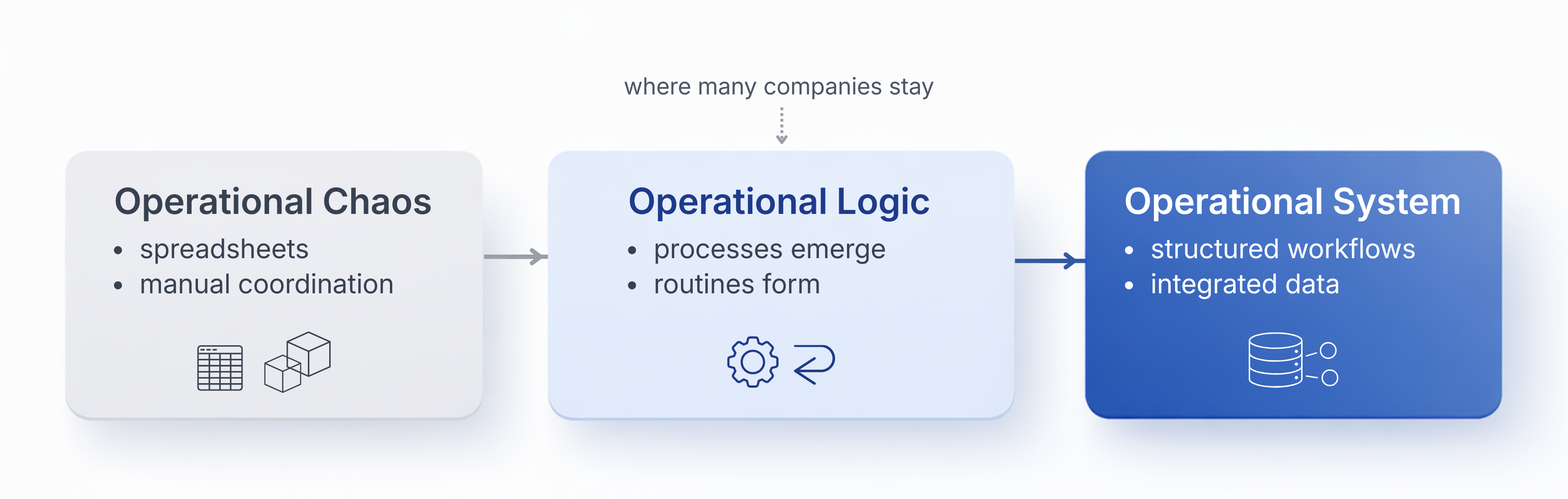
Operations rarely begin with a fully designed system.
Processes evolve through spreadsheets, manual coordination, and disconnected tools.
Kiiva helps organizations transform that operational logic into structured systems.
By analyzing how work actually moves, we design operational systems that integrate workflows, information, and decisions into repeatable, scalable processes.
How Operational Systems Evolve
Operational systems are not born — they emerge over time.
Businesses start with spreadsheets, emails, and ad hoc tools.
Over time, patterns form, decisions are repeated, and rules are encoded informally.
Our approach is to map real workflows, identify bottlenecks, and design systems that reflect how work actually happens.
What Kiiva Builds
Kiiva builds operational systems that connect workflows, information, and decision-making into a structured environment designed around how each organization actually operates.
Processes
We structure operational workflows so teams can execute work consistently and efficiently.
Information
Data is organized and integrated to provide clarity across the organization.
Decisions
Rules and logic are encoded into the system to support better decision-making.
Preparing Operations for Automation & AI
Automation and AI can improve efficiency and decision-making — but only when the operational system is structured.
Fragmented workflows and disconnected tools often make automation create complexity rather than clarity.
- Clear operational workflows
- Reliable structured data
- Integrated operational systems
- Visibility into how work moves
First we build the foundation. Then automation and AI can deliver real value.
Kiiva Expertise
Kiiva combines technical architecture with practical business understanding. With experience across administration, accounting, sales, and operational coordination, we design systems that reflect real-world processes — ensuring clarity, control, and scalability as your team grows.
With these systems in place, businesses gain clarity, efficiency, and control, while creating the groundwork for intelligent automation and AI.
Operational System Components
Each Kiiva system is designed around the workflows and operational structure of the organization. The components below represent the core elements commonly included in the systems we build.

Administrative Platform
A structured environment where transactions are recorded accurately, roles are clearly defined, and management maintains visibility across operations. Designed around your workflows — not generic templates.

Operational Mobile Tools
Mobile applications built for daily execution. Simple for teams to use, fully integrated with your administrative system, and aligned with how work actually happens in the field.
Connected Operational Flow
Field activity, administrative oversight, and reporting are connected within one system. No duplicated spreadsheets. No fragmented tracking. Just a clear operational structure.
Built to Support Expansion
As responsibilities evolve and teams grow, your system evolves with you. Modular design ensures your operational structure remains stable while adapting to change.

From Operational Analysis to Implementation
We begin by understanding how your company truly operates. Then we design, build, and refine a system that supports your workflows long-term — not just at launch.

Clarity. Control. Sustainable Growth.
Kiiva helps growing businesses move beyond informal coordination. We design structured systems that create operational stability without unnecessary complexity.
Selected Work
Examples of operational systems designed to structure workflows, connect information, and replace manual coordination.

Mobile Field Execution
Capture tasks, transactions, and operational updates directly from the field with minimal friction.
Administrative Control Hub
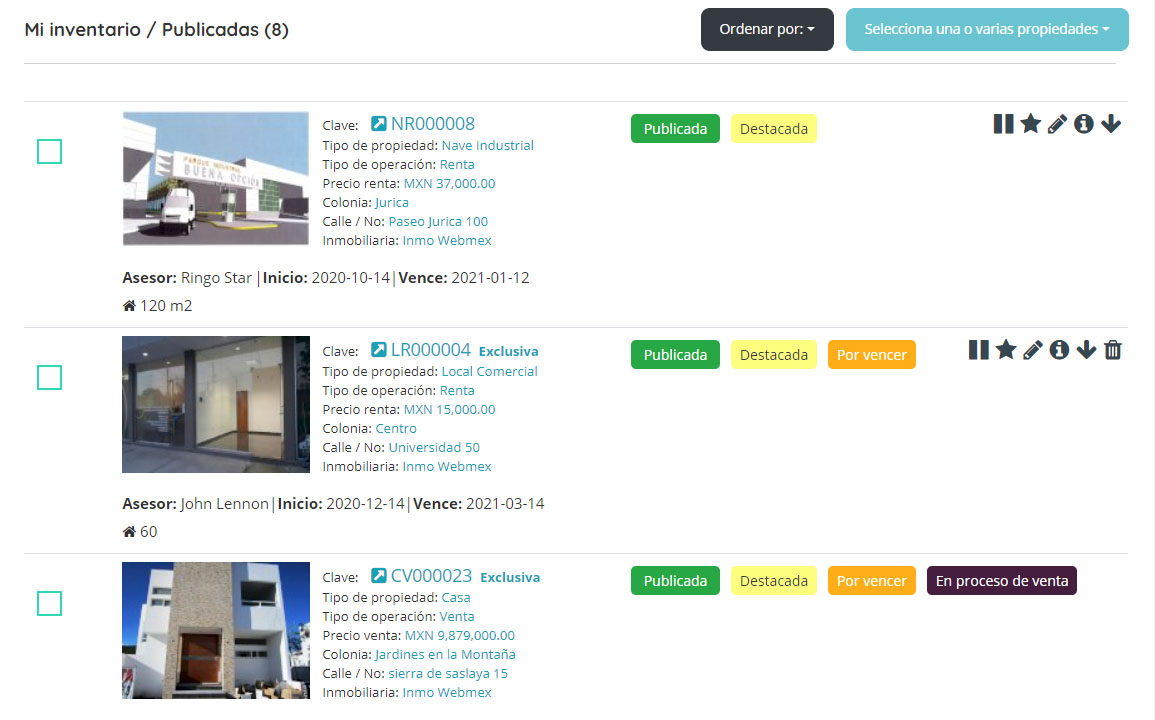
Manage permissions, oversight, and reporting in a structured operational environment.
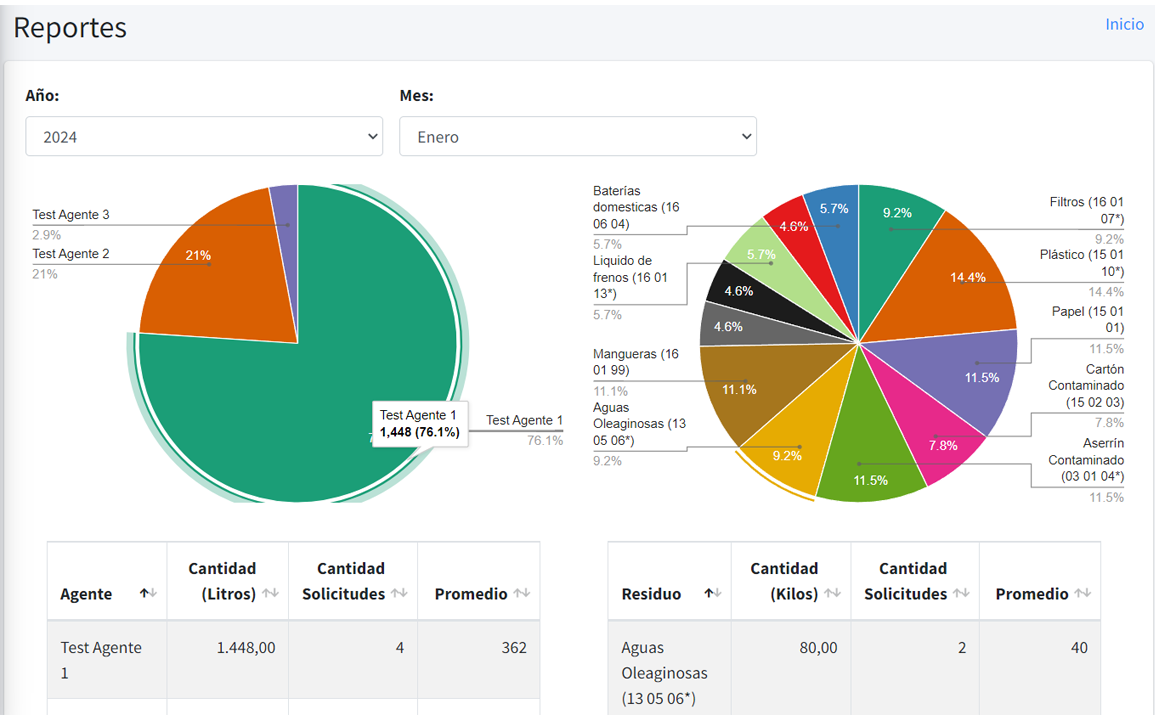
Operational Reporting
Gain clear, real-time visibility into operational and financial performance.
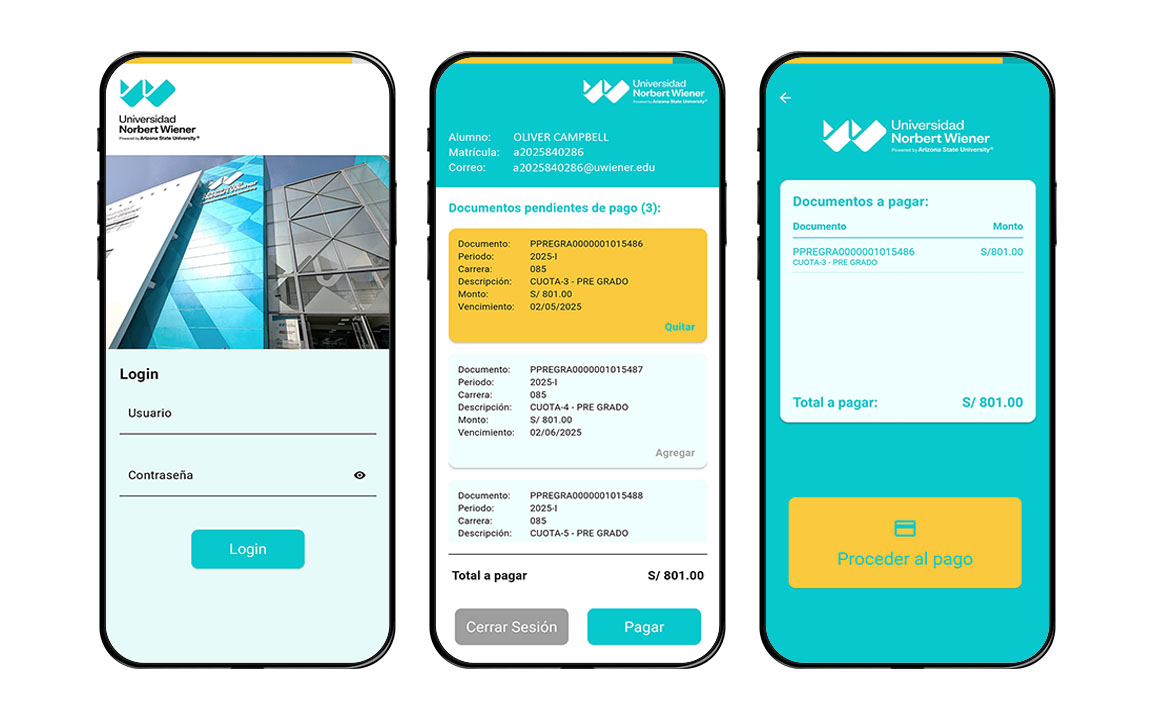
System Integration Architecture
Connect previously disconnected tools into a cohesive operational system.
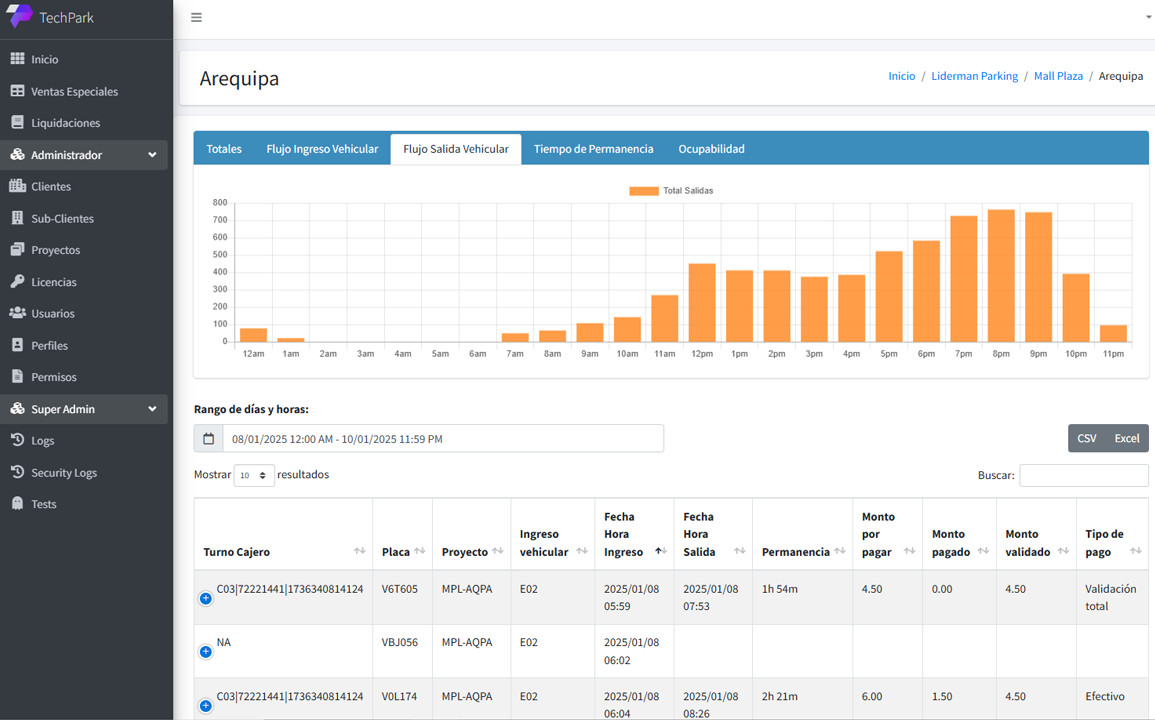
Data Structuring & Analytics
Transform operational data into structured insights that support better decisions.
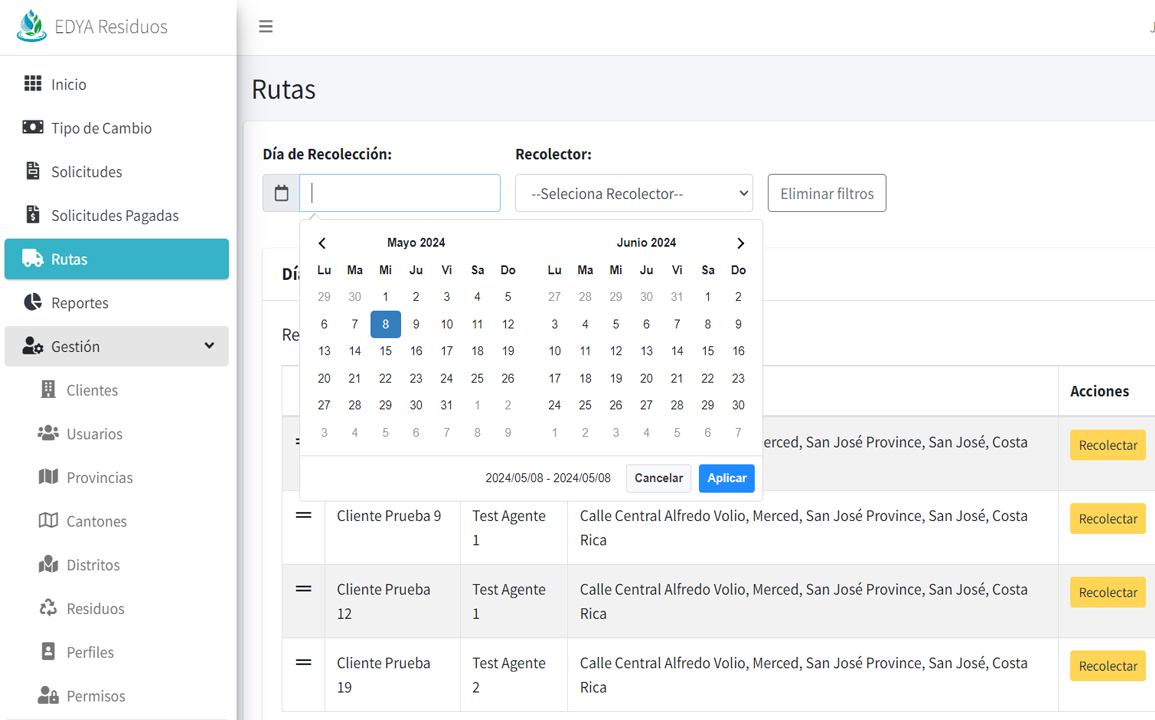
Operational Process Structuring
Replace informal coordination with clearly defined operational processes.
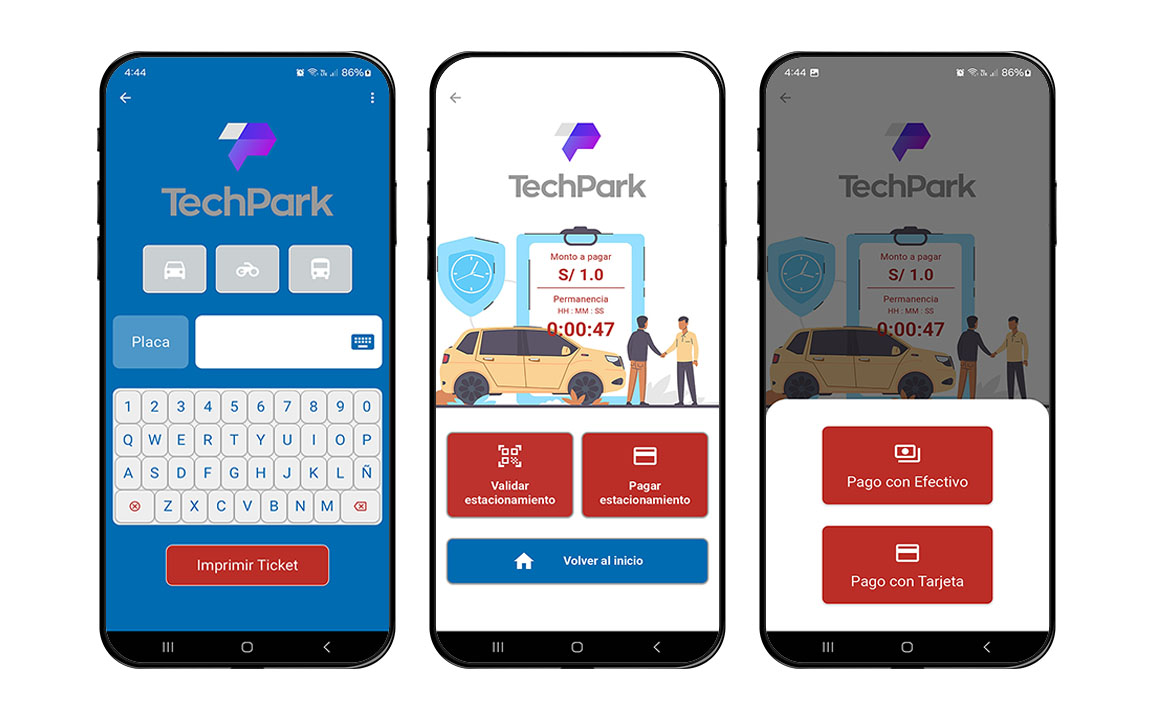
Workflow System Design
Embed real operational logic into structured workflows that guide execution.
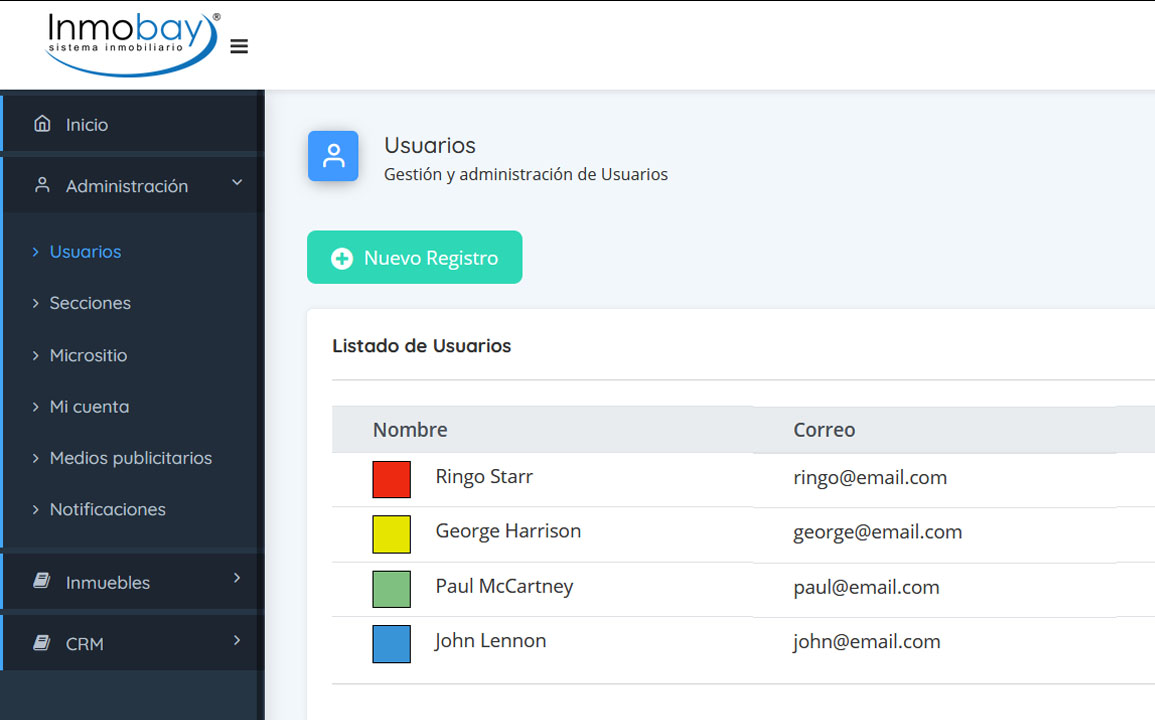
User & Role Governance
Define responsibilities, control system access, and maintain accountability across teams.
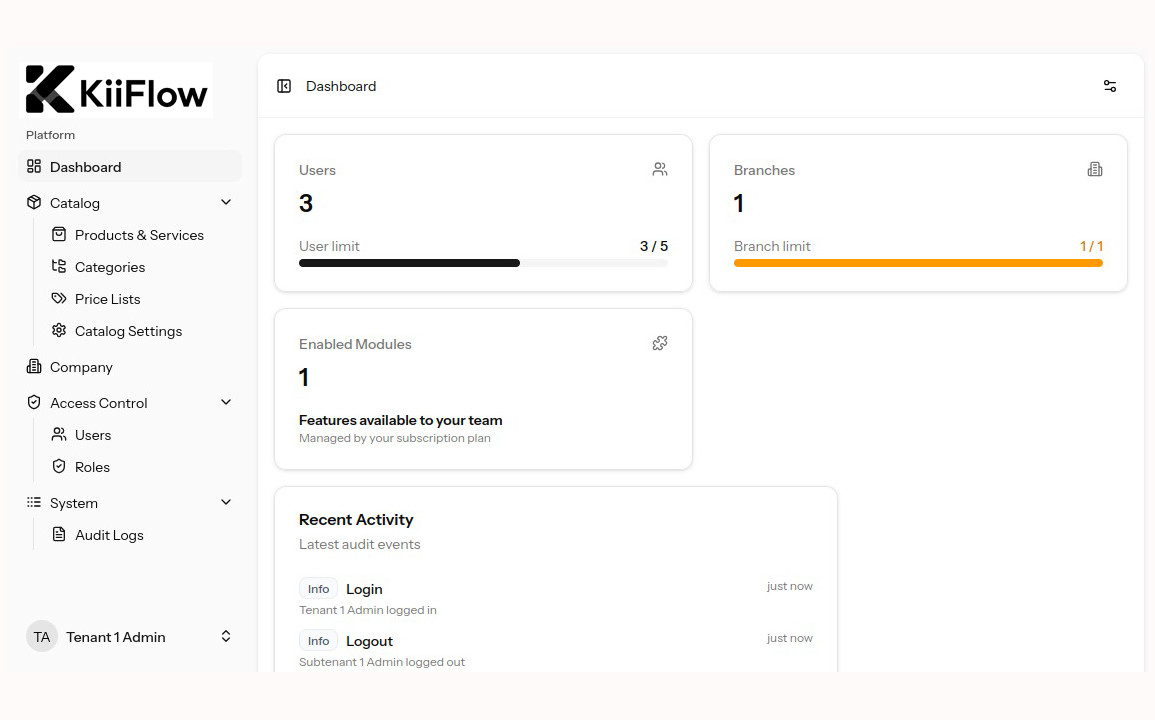
Operational Overview
Central dashboard providing visibility into system usage, operational modules, and core platform activity.
Founders' Perspective

Jorge Ramos
Co-Founder & CEO
Many growing companies eventually reach a point where their operations become more complex than the systems supporting them. Processes that once worked informally end up scattered across spreadsheets, disconnected tools, and manual coordination between teams.
My focus at Kiiva is transforming that operational complexity into structured digital systems. With more than 17 years working directly inside business operations — including purchasing, sales, and project evaluation — I learned how companies actually function from the inside. That operational perspective guides how we design systems that reflect real workflows while bringing greater structure, visibility, and control to growing organizations.

Mirva Kurtti
Co-Founder & Software Development & Data Systems
At Kiiva I focus on the technical implementation of operational systems — transforming system design into reliable software platforms that companies use in their daily operations.
With more than 15 years of experience in software development and data management, my work centers on building the digital infrastructure behind these systems: administrative platforms, data environments, integrations, and mobile operational tools. Together with our system design approach, this allows us to build solutions that replace fragmented tools and manual processes with structured operational platforms that scale with the organization.
Start Structuring Your Operations
If your business has grown through spreadsheets, manual coordination, and disconnected tools, it may be time to transform those processes into a structured operational system.
We work with organizations to understand how their operations actually function and design systems that bring clarity, coordination, and scalability.
Contact Us
Start a conversation about designing systems that support your next stage of growth.